Subduction interface
mechanics
How do strong blocks and a weak matrix share stress? I use exhumed high-pressure rocks to investigate stress heterogeneity, transient coupling and the geological record of slow slip.
FIELD → INTERFACEACADEMIC PROFILE / BEIJING, CHINA
Humboldt Research Fellow
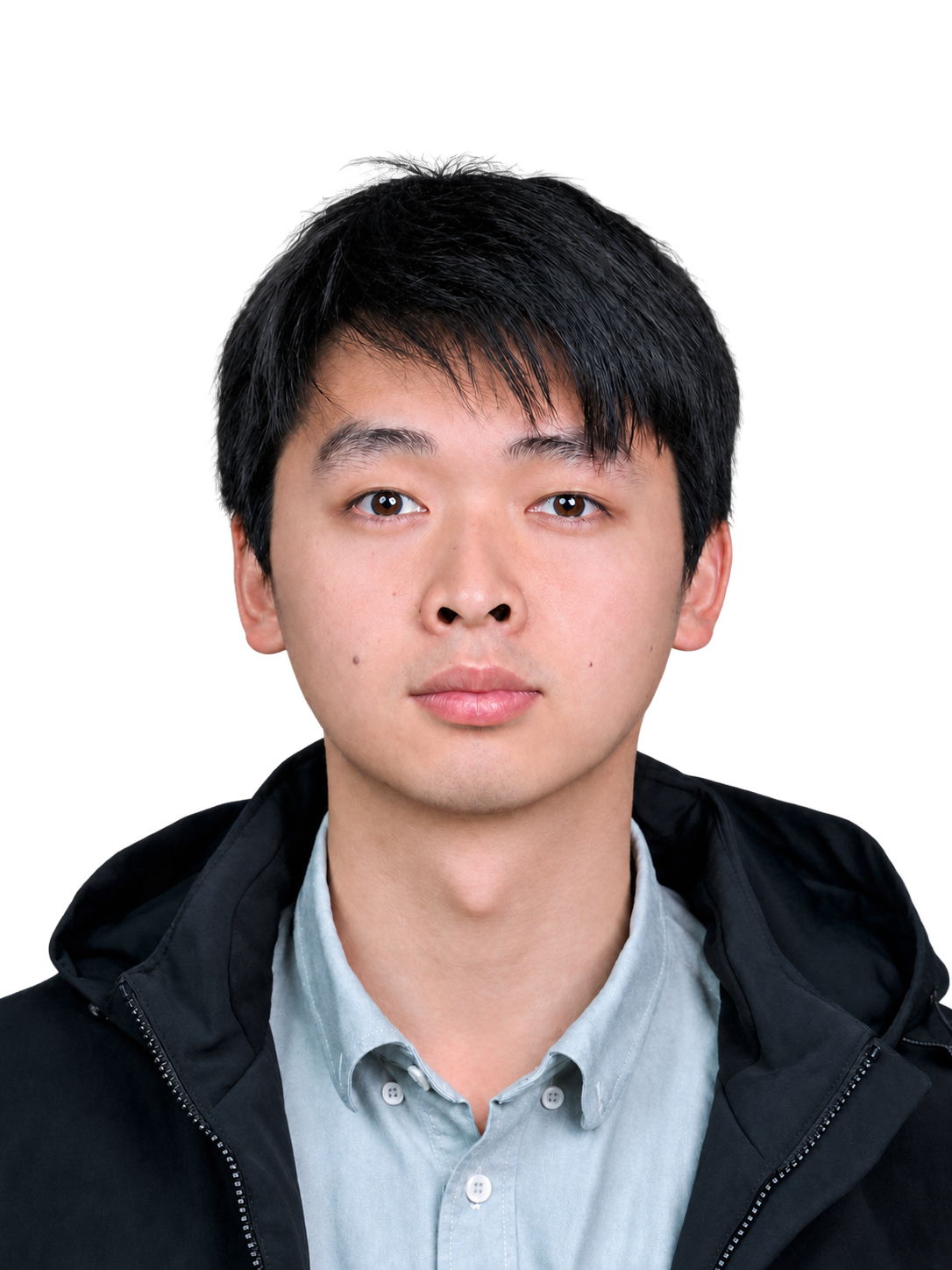
武亚威Exploring how rocks deform and what they reveal about subduction interfaces.
Field observations.
Microstructures.
Physical mechanisms.
Academic Background
Peking University × CAGSLyon, FranceHumboldt Fellowship 2026I investigate the connection between the structures we see in rocks and the physical processes operating deep within the Earth.
My research brings together field structural geology, metamorphic petrology, microstructural analysis and rock rheology. Working on exhumed high-pressure rocks from the North Qilian paleo-subduction interface, I explore how contrasting rock types accommodate stress and strain—and how these records may illuminate transient coupling and deep slow slip.
My doctoral research was jointly supervised at Peking University and the Chinese Academy of Geological Sciences. A CSC-funded research exchange in Lyon expanded this work through international collaboration. My next research direction connects natural rock records with high-pressure, high-temperature deformation experiments.
02 / RESEARCH
Connecting field evidence,
mineral fabrics and rock mechanics.
How do strong blocks and a weak matrix share stress? I use exhumed high-pressure rocks to investigate stress heterogeneity, transient coupling and the geological record of slow slip.
FIELD → INTERFACEWhat can mineral fabrics reveal about deformation? I use EBSD and MTEX to analyze crystallographic fabrics, grain and subgrain structures, and their implications for rock rheology and deformation mechanisms.
GRAINS → DEFORMATIONHow does oblique convergence shape an orogen? My work examines strain partitioning, transpression and the tectonic history of the Qilian–Qaidam region in northern Tibet.
STRUCTURES → TECTONICSCORE EXPERTISE
I specialize in electron backscatter diffraction (EBSD) and crystallographic analysis with MTEX, using quantitative microstructural data to investigate rock deformation.
03 / SELECTED PUBLICATIONS
Nature Communications 16, 9116
Natural rock records offer a window into heterogeneous stress and transient mechanical coupling along deep subduction interfaces.
GSA Bulletin 136, 1889–1915
Research shaped by fieldwork,
mentorship and collaboration.
GFZ Helmholtz Centre for Geosciences · Potsdam, Germany
Postdoctoral fellowship awarded in July 2026. Research stay planned for December 2026, with a focus on experimental rock deformation and subduction interface mechanics.
Host: Dr. Sarah Incel · Collaboration with the group of Onno Oncken
Humboldt profile ↗Peking University × Chinese Academy of Geological Sciences
Joint doctoral training on stress, deformation and rheological heterogeneity in the North Qilian paleo-subduction interface.
Supervisors: Jianxin Zhang & Bo Zhang
Lyon, France
One-year research exchange supported by the China Scholarship Council, extending work on high-pressure rocks and deformation processes.
Supervisor: Samuel Angiboust
05 / RECOGNITION & SERVICE
Journal peer review
Invited reviewer for Tectonophysics.
Advanced expertise in EBSD & MTEX
Crystallographic fabrics · Quantitative microstructural analysis · MATLAB · Field structural analysis · Metamorphic petrology
06 / CONTACT
For research discussions and academic correspondence.